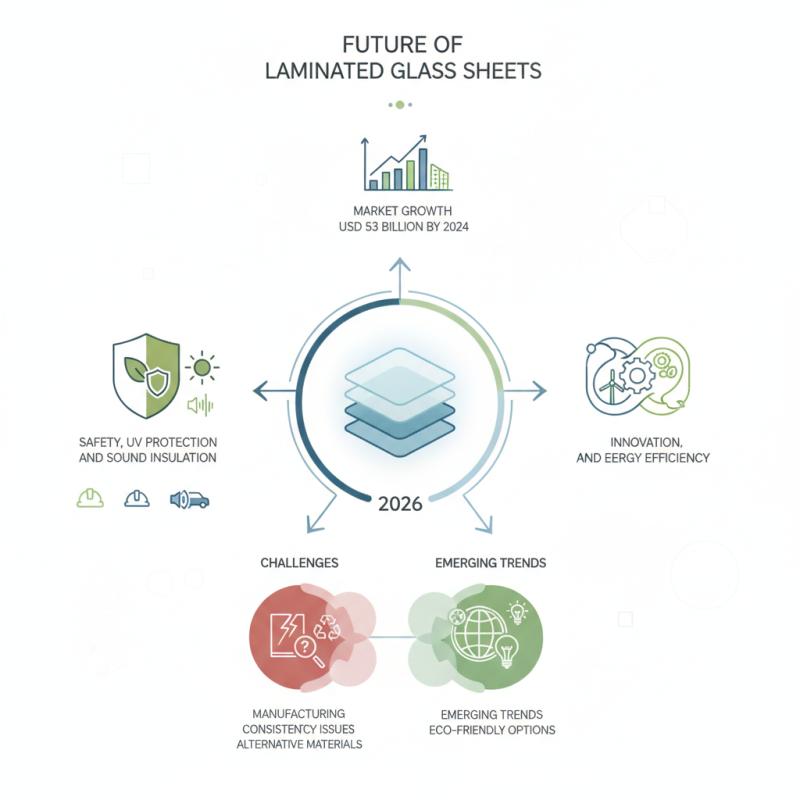
As we head towards 2026, the demand for Laminated Glass Sheets continues to rise globally. According to a recent industry report, the market for laminated glass is projected to reach USD 53 billion by 2024, driven by its increasing application in construction and automotive sectors. Laminated Glass Sheets offer safety, UV protection, and sound insulation, making them a preferred choice among architects and designers.
In the competitive landscape, suppliers must ensure high-quality standards and innovative designs to capture buyer interest. However, there are challenges. Issues with manufacturing consistency can lead to product recalls, shaking buyer confidence. Moreover, the rise of alternative materials calls for a critical evaluation of laminated glass's position in the market.
Awareness of emerging trends is crucial. Sustainability and energy efficiency are becoming major influencers in buying decisions. As global buyers seek eco-friendly options, laminated glass solutions must evolve. Balancing innovation with reliability will be essential for key players aiming to thrive in this dynamic industry.
The global laminated glass market is witnessing significant changes in 2026. According to recent reports, the market is expected to grow at a CAGR of 7.5% between 2021 and 2026. This growth reflects rising demand in segments such as construction, automotive, and electronics. Safety and energy efficiency are key drivers. Laminated glass enhances structural strength and provides sound insulation.
Notably, the architectural sector is evolving. Buildings now prioritize green materials. Laminated glass has become essential in energy-efficient designs. Advanced technologies have improved its aesthetic appeal and performance. However, manufacturing processes can be resource-intensive. This raises concerns about sustainability practices in the industry.
Consumer preferences are shifting. Many seek innovative designs but remain cost-conscious. This dynamic creates challenges for manufacturers. They must balance quality with affordability. Staying updated with trends and consumer needs is crucial. As the market evolves, collaboration among stakeholders becomes paramount. The future of laminated glass appears promising yet requires careful navigation.
: Laminated glass enhances safety and can reduce noise levels by up to 90%. It's especially valued in urban spaces.
Thicker laminated glass generally offers better safety and sound reduction. However, it may increase weight and installation complexity.
The two main types are PVB and EVA. They differ in durability, which affects overall performance.
Companies are exploring eco-friendly materials. Balancing production costs with environmental impact is a challenging but necessary goal.
The construction and automotive industries are significant sectors. Together, they hold a large share of the laminated glass market.
It reduces heat transfer, leading to lower energy costs. This feature is appealing for modern building designs.
Companies must balance innovation with production costs. Investment can be significant, making decision-making difficult.
Advancements enable complex patterns and textures. Designers can create unique aesthetic applications with innovative techniques.
Pay attention to interlayer type and glass clarity. Regular inspections for wear are also essential for safety.
The focus is on durability and energy efficiency, especially in construction. Continuous innovation is needed to meet evolving demands.
The article "2026 Top Laminated Glass Sheets for Global Buyers" explores the evolving landscape of the laminated glass market. It begins with an overview of market trends and projections for 2026, highlighting the increasing demand for Laminated Glass Sheets across various applications, including construction and automotive sectors. Key manufacturers are pushing innovation in production techniques, thereby enhancing the performance and aesthetic appeal of laminated glass products.
Furthermore, the article delves into the technical specifications and standards that govern Laminated Glass Sheets, ensuring safety and quality in their usage. Environmental considerations and sustainability practices within the laminated glass industry are also discussed, underscoring the importance of eco-friendly manufacturing processes in meeting consumer and regulatory expectations. This comprehensive analysis provides valuable insights for global buyers looking to navigate the laminated glass market effectively.

 BYG.GLASS