Top 10 Types of Insulated Glass for Global Buyers

Time:2026-10-13 Author:Madeline
0%

Choosing the right Insulated Glass unit is not simply a matter of selecting two panes and filling the cavity with argon. Climate, window orientation, frame material, spacer design, coating, and installation quality can change actual performance. A triple-glazed unit may excel in a cold northern city, yet create unnecessary cost in a mild coastal region. The choice is rarely tidy.

The International Energy Agency reports that buildings consume about 30% of global final energy and produce roughly 26% of energy-related emissions. In the United States, the Department of Energy’s Energy Saver guidance indicates that windows can represent 25%–30% of household heating and cooling energy use. These figures explain why global buyers increasingly examine U-values, solar heat-gain coefficients, visible transmittance, gas retention, and condensation resistance before approving a specification.

Dr. Stephen Selkowitz, a leading building-envelope researcher and former Lawrence Berkeley National Laboratory expert, has described windows as “the most complex and dynamic component of the building envelope.” That complexity matters. A low-emissivity coating may reduce winter heat loss, while selective glazing can limit harsh summer sunlight without making interiors feel dark. However, laboratory ratings do not guarantee perfect field results. Poor edge sealing, incorrect installation, or a mismatched spacer can undermine expensive glass.

This guide compares ten major types of Insulated Glass for global buyers. It considers performance, climate suitability, durability, maintenance, and practical purchasing risks. Some categories overlap. That is normal. Real projects are less perfect than product brochures suggest.
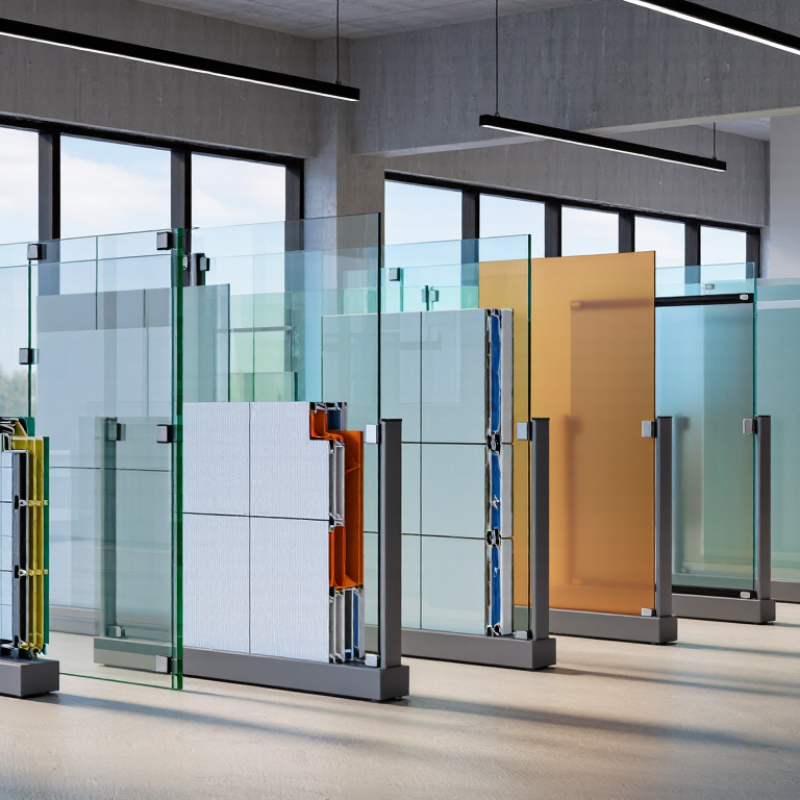
Top 10 Types of Insulated Glass for Global Buyers

Insulated Glass Basics and Key Performance Features

Insulated glass combines two or more panes with a sealed cavity. The cavity usually contains dry air or argon. A spacer and edge seal reduce moisture entry. Low-emissivity coatings limit radiant heat transfer across the cavity.

The U.S. Department of Energy reports that windows can cause 25–30% of residential heating and cooling energy use. U-factor measures heat flow; lower values indicate better insulation. Solar heat gain coefficient, or SHGC, measures transmitted solar heat. Lower SHGC can help in hot climates, while higher values may benefit cold regions.

Performance depends on more than pane count. Clear, low-E, solar-control, laminated, acoustic, and triple glazing serve different conditions. Triple units can improve thermal resistance, but they also add weight and may reduce visible light. According to the IEA Buildings 2023 report, buildings consumed about 30% of global final energy in 2022. Small specification errors can therefore become expensive over many years.

Gas retention, spacer quality, frame design, installation, and orientation all matter. A premium coating cannot correct a leaking seal. Nor can a low U-factor guarantee comfort beside an unshaded west-facing window. No specification is perfect. Global buyers should compare tested U-factor, SHGC, visible transmittance, acoustic ratings, and service-life evidence under the intended climate.

Top 10 Types of Insulated Glass for Global Buyers

Insulated Glass Basics and Key Performance Features

The chart compares representative center-of-glazing U-values for ten common insulated-glass configurations. U-values are shown in W/m²·K; lower values generally indicate better thermal insulation. Actual performance depends on glass thickness, cavity width, gas fill, coatings, spacer systems, and frame design.

Top 10 Insulated Glass Types for Global Buyers

Top 10 Insulated Glass Types for Global Buyers

Global buyers can choose from ten practical insulated glass types: double glazing, triple glazing, Low-E glazing, solar-control glazing, gas-filled units, acoustic glazing, laminated safety glazing, tempered glazing, vacuum glazing, and decorative privacy glazing. Each type solves a different building problem. Double glazing remains common for moderate climates and standard façades. Triple glazing provides stronger thermal performance, especially in cold regions. Low-E coatings reduce heat transfer while preserving daylight. Solar-control glass helps limit harsh summer heat and glare.

Gas-filled units often use argon to improve insulation. Their performance depends on proper sealing and manufacturing quality. Acoustic glazing uses different glass thicknesses to reduce traffic noise. Laminated safety glass holds together after breakage, while tempered glass offers higher impact resistance. Vacuum glazing is thinner and useful where frame depth is limited. Decorative or privacy glass supports visual comfort in offices, bathrooms, and street-level spaces.

Specification work should begin with climate, orientation, wind exposure, and local building codes. A southern façade may need solar control, while a northern façade may benefit from higher insulation. Check U-value, solar factor, visible light transmission, spacer design, and edge-seal durability. Condensation can still appear if frames or installation details are weak. This is often overlooked. In project reviews, glass selection seems correct on paper but fails near cold edges. Buyers should request independent test data, sample units, warranty terms, and installation guidance. No single type wins every project. Performance targets must match real site conditions, not only catalogue figures.

Comparing Thermal, Acoustic, Solar, and Safety Performance

Top 10 Types of Insulated Glass for Global Buyers

Comparing Thermal, Acoustic, Solar, and Safety Performance

The ten common types include clear double, triple, low-E, argon-filled, warm-edge, acoustic laminated, solar-control, tinted, laminated safety, and tempered insulated glass. These categories can overlap. A triple unit may also use low-E coatings, argon gas, and warm-edge spacers.

For thermal performance, triple and low-E glass usually reduce heat transfer better than standard clear double glazing. Argon-filled cavities can improve insulation, but poor seals will weaken that benefit. Warm-edge spacers also reduce edge condensation in cold climates. Acoustic laminated glass helps soften traffic noise, especially when panes have different thicknesses. However, frame quality and installation often matter as much as the glass.

Solar-control and tinted glass can reduce glare and indoor overheating near large windows. They may also lower useful winter sunlight. Laminated safety glass holds together after breakage, while tempered glass breaks into smaller fragments. Neither option makes a window completely risk-free. Real performance depends on climate, orientation, cavity width, coating position, and local testing standards.

Tips: Request tested U-value, solar heat gain, acoustic rating, and safety classification. Compare the complete window system, not glass alone. Ask for spacer details and seal durability. I have seen attractive specifications fail because installation tolerances were ignored. Check mock-up samples before approving a large order.

How to Select Insulated Glass for Different Building Applications

Top 10 Types of Insulated Glass for Global Buyers

How to Select Insulated Glass for Different Building Applications

Climate comes first. The right insulated glass depends on temperature, sunlight, orientation, noise, and local codes. The UNEP Global Status Report for Buildings and Construction 2023 states that buildings used 34% of global energy and produced 37% of energy-related emissions in 2022. Better glazing can reduce heating and cooling demand, but only when specified correctly.

For cold climates, choose triple insulating glass with low-emissivity coatings, argon or krypton gas, and warm-edge spacers. A low U-value helps retain indoor heat. In hot, sunny regions, double glazing with solar-control low-E glass can reduce heat gain. Check the solar heat gain coefficient, not U-value alone. Climate comes first. For homes, the U.S. Department of Energy reports that windows can represent 25–30% of heating and cooling energy use. This makes orientation and window size important.

Busy streets may require laminated acoustic glass, asymmetric pane thicknesses, and carefully sealed frames. High-rise buildings need safety glass, wind-load calculations, and tested edge durability. Humid areas benefit from warm-edge spacers and strong condensation resistance. Coastal projects need corrosion-resistant components and reliable drainage. Renovations often suit slim double glazing, because thicker units may not fit existing frames. Not always. A premium glass unit can still perform poorly with weak installation, thermal bridges, or incorrect shading assumptions. Specify whole-window values, verify local standards, and review the building envelope as one system.

Top 10 Types of Insulated Glass for Global Buyers - How to Select Insulated Glass for Different Building Applications
Rank Insulated Glass Type Typical Configuration Main Performance Characteristics Best Building Applications Key Selection Considerations Typical U-Value Range*
1 Low-E Double Glazing Two panes with a sealed air or argon-filled cavity; one low-emissivity coating Reduces conductive and radiant heat transfer while providing a balanced cost-to-performance ratio Residential buildings, offices, schools, retail units and general commercial façades A strong standard choice for moderate climates. Select the coating position, cavity width and gas fill according to heating or cooling priorities. Approximately 1.0–1.6 W/m²·K
2 Low-E Triple Glazing Three panes with two sealed cavities and two low-emissivity coatings Higher thermal insulation and warmer internal glass surfaces than most double-glazed units Cold-climate housing, passive-house projects, hospitals and high-performance commercial buildings Useful where heating demand and interior comfort are priorities. Check frame depth, sash weight, solar factor and structural capacity. Approximately 0.5–0.9 W/m²·K
3 Solar-Control Low-E Glass Double or triple glazing using a spectrally selective solar-control coating Limits solar heat gain while maintaining useful daylight and reducing cooling loads Curtain walls, office towers, hotels and buildings in hot or sunny climates Compare solar heat gain coefficient, visible light transmittance and exterior reflectance. Avoid excessive solar reduction where daylight is important. Approximately 0.7–1.5 W/m²·K
4 Laminated Insulated Glass At least one laminated pane made from glass bonded with a polymer interlayer, combined with a sealed cavity Improves safety, post-breakage retention and acoustic performance while providing thermal insulation Schools, storefronts, skylights, overhead glazing, balconies and façades exposed to impact risk Choose the interlayer type and thickness for safety, security, acoustic or UV-control objectives. Consider edge protection and proper drainage. Approximately 1.0–1.8 W/m²·K
5 Acoustic Insulated Glass Asymmetric glass thicknesses, often with an acoustic interlayer, plus a sealed cavity Reduces traffic, aircraft, rail and urban noise; performance depends on frequency and complete façade design Hotels, apartments, hospitals, schools and buildings near busy roads or transport corridors Request weighted sound reduction data and frequency-specific values. Window frames, vents, seals and wall construction must also be acoustically rated. Approximately 1.0–1.8 W/m²·K
6 Tempered Insulated Glass Heat-treated safety glass used in one or both panes of a sealed insulating unit Greater resistance to thermal stress and mechanical impact than annealed glass; breaks into small granular pieces Doors, low-level glazing, façades, shower areas, commercial entrances and locations requiring safety glazing Tempering does not automatically provide security or post-breakage retention. Use laminated glass where falling-glass protection is required. Approximately 1.0–1.7 W/m²·K
7 Warm-Edge Spacer Insulated Glass Insulating glass unit using a low-conductivity spacer instead of a conventional highly conductive metal edge Reduces edge heat loss and interior-edge condensation risk; improves whole-window thermal performance Energy-efficient homes, passive buildings, cold regions and high-performance window systems Review spacer material, gas retention, sealant compatibility and corner construction. The frame and installation details strongly affect the final result. Approximately 0.6–1.4 W/m²·K
8 Gas-Filled Insulated Glass Sealed cavity filled with argon or another approved insulating gas instead of ordinary air Improves cavity insulation and can lower the center-of-glass U-value when the unit is correctly sealed Energy-efficient residential and commercial windows across heating and mixed climates Gas fill is not a standalone glass type; it is combined with double or triple glazing. Verify fill level, seal integrity, cavity width and long-term retention. Approximately 0.6–1.5 W/m²·K
9 Decorative or Obscure Insulated Glass Double or triple glazing incorporating patterned, frosted, acid-etched or translucent glass Provides privacy and visual design options while retaining the basic thermal benefits of insulating glass Bathrooms, offices, entrance screens, internal partitions, healthcare facilities and residential façades Check daylight transmission, cleaning requirements, pattern orientation and whether the decorative surface faces the cavity or the exterior. Approximately 1.0–1.8 W/m²·K
10 Fire-Resistant Insulated Glazing Certified fire-rated glazing system, which may include specialized glass, interlayers, cavities and fire-rated framing Designed to provide a specified period of fire resistance, such as integrity, insulation or both, when tested as a complete system Fire-rated doors, stairwells, corridors, compartment walls, atriums and high-rise buildings Use only a tested and approved glass-and-frame assembly. Confirm the required fire rating, size limits, framing system, installation method and local code compliance. Varies by certified system and fire-rating period
*Typical center-of-glass U-value ranges are indicative only. Actual performance depends on glass thickness, coating, cavity width, gas fill, spacer, frame, dimensions, edge conditions and applicable testing standards.

Global Standards, Specifications, and Purchasing Considerations

Top 10 Types of Insulated Glass for Global Buyers
Global Standards, Specifications, and Purchasing Considerations

Insulated glass units vary widely in climate performance, safety, and service life. Common options include double-glazed, triple-glazed, low-emissivity, solar-control, laminated, tempered, acoustic, fire-resistant, gas-filled, and vacuum units. Each type needs a defined purpose. A triple unit may reduce heat transfer, but it can increase frame weight and installation demands.

Standards matter more than attractive brochures. ISO 20492 covers insulating glass performance requirements, while EN 1279 addresses European unit durability and production controls. ASTM standards are widely used for glass quality and safety in North America. Buyers should request documented U-values, solar heat gain coefficients, visible transmittance, glass thickness, spacer type, gas concentration, and edge-seal warranty. Ask for test reports from accredited laboratories.

Numbers need context. The International Energy Agency’s 2023 buildings report identifies buildings as responsible for about 30% of global final energy consumption. Better glazing can reduce heating and cooling loads, but results depend on orientation, shading, frames, and installation. A low U-value alone can mislead. In hot regions, excessive solar gain may still overheat rooms. In coastal projects, seal durability deserves closer inspection. Purchasing teams should compare whole-window performance, not center-glass figures only. It is easy to overlook condensation risk. That mistake can become expensive. Specifications should also define tolerances, visual quality, packaging, delivery temperature exposure, and replacement procedures. Some project decisions remain imperfect, especially when local test methods do not align neatly with imported products.

FAQS

Which insulated glass type offers the strongest thermal performance?

Triple glazing usually reduces heat transfer better than standard double glazing. Low-emissivity coatings can improve insulation further. It is heavier.

How do gas-filled cavities improve window insulation?

Gas-filled cavities can slow heat movement between panes. Poor seals may reduce this benefit over time. Seal quality matters.

Can warm-edge spacers reduce condensation?

Warm-edge spacers can reduce condensation around glass edges in cold climates. They do not eliminate all moisture problems. Installation still matters.

Which glass can help reduce traffic noise?

Acoustic laminated glass can soften traffic noise, especially with different pane thicknesses. Frames and installation also affect results. Glass is not everything.

How can solar-control or tinted glass affect indoor comfort?

These options can reduce glare and overheating near large windows. They may also reduce useful winter sunlight. Orientation matters greatly.

What happens when laminated safety glass breaks?

Laminated glass usually holds together after breakage. This can reduce falling fragments and opening exposure. It is not completely risk-free.

How is tempered insulated glass different from laminated safety glass?

Tempered glass generally breaks into smaller fragments. Laminated glass usually stays attached to its inner layer. Neither option guarantees complete safety.

What information should buyers request before ordering?

Request tested U-values, solar heat gain, acoustic ratings, and safety classifications. Also check glass thickness, gas concentration, spacer type, and seal durability. Ask for laboratory test reports.

Why should buyers compare the complete window system?

Frames, installation tolerances, shading, and orientation can change real performance. A low glass U-value may still produce overheating or condensation. Specifications can mislead.

What practical checks can prevent expensive mistakes?

Review mock-up samples before approving a large order. Define visual quality, packaging, delivery exposure, and replacement procedures. I have seen attractive specifications fail because installation tolerances were ignored.

Conclusion

This guide introduces Insulated Glass as a high-performance glazing solution designed to improve energy efficiency, indoor comfort, and building safety. It explains the basic structure of insulated units, including multiple glass panes, sealed cavities, spacer systems, and optional gas fills, while highlighting key performance factors such as thermal insulation, acoustic control, solar protection, condensation resistance, and impact safety. It also reviews ten common types, including double, triple, low-emissivity, solar-control, laminated, tempered, acoustic, and decorative configurations.

The article compares these options according to climate, orientation, occupancy, and project priorities, helping global buyers select suitable glass for homes, offices, curtain walls, skylights, and specialized facilities. It further outlines purchasing considerations such as glass thickness, cavity width, safety requirements, energy targets, quality control, documentation, shipping, and compliance with recognized international standards. By balancing performance, durability, budget, and application needs, buyers can develop practical glazing specifications for diverse building projects.


Madeline

Madeline

Madeline is a dedicated marketing professional with a wealth of expertise in our company's core offerings. With a keen understanding of the industry, she brings a unique perspective to her role, consistently delivering high-quality content that highlights the superior aspects of our products. As......