Top Laminated Glass Manufacturers and Suppliers Worldwide

Time:2026-10-18 Author:Liam
0%

Laminated Glass has moved from a specialist safety product to a core material in modern construction, transport, and architectural design. It combines glass sheets with an interlayer, usually PVB, SentryGlas, or EVA. When broken, the interlayer helps hold fragments in place. That small detail matters beside a crowded storefront or a vehicle windscreen.

Industry estimates show steady expansion. Grand View Research valued the global laminated glass market at approximately USD 23 billion in 2023 and projected continued growth through 2030. Fortune Business Insights also forecasts sustained growth, although its market boundaries and figures differ. These differences deserve attention. Reports may classify automotive, architectural, solar, and specialty glass differently. A single number is not the whole market.

This guide examines leading manufacturers and suppliers worldwide, including AGC, Saint-Gobain, NSG Group, Guardian Glass, Vitro, Şişecam, Taiwan Glass, and Fuyao Glass. Company scale alone does not prove product quality. Buyers should compare interlayer technology, visible-light performance, acoustic ratings, safety certifications, fabrication capacity, delivery reliability, and regional support. The International Organization for Standardization and regional building standards provide useful reference points, but local compliance still requires verification. Product data sheets can also hide practical limits, such as edge exposure or maximum panel dimensions. That is where careful review matters.

The ranking is not absolute. It reflects market reach, manufacturing capability, product breadth, technical reputation, and supplier responsiveness. Some smaller processors may outperform larger groups on custom fabrication. That possibility should not be ignored. Based on published company information and established market research, the following overview offers a practical starting point for architects, contractors, vehicle manufacturers, distributors, and procurement teams.
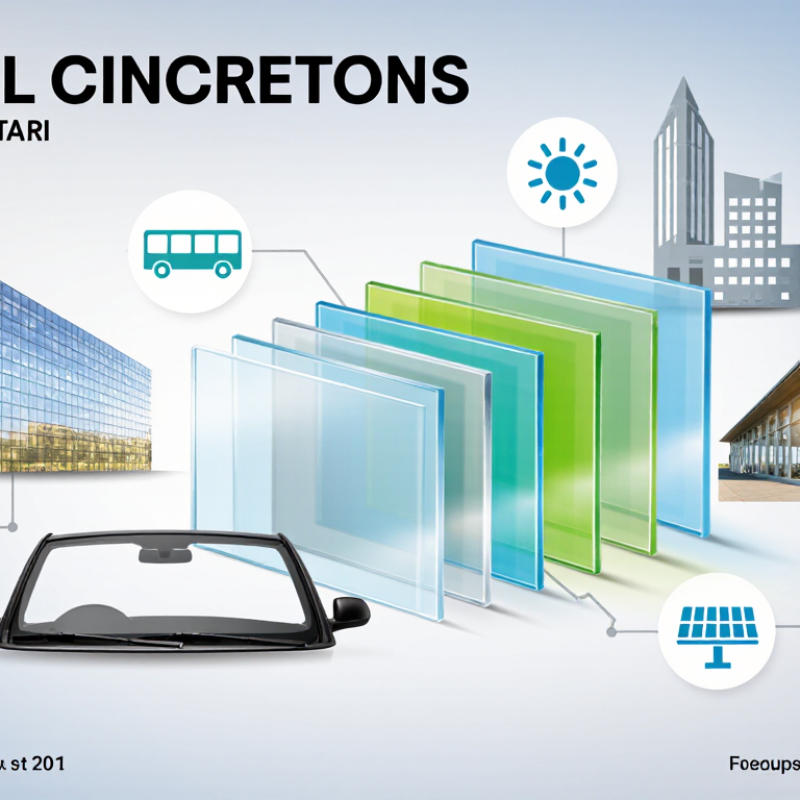
Top Laminated Glass Manufacturers and Suppliers Worldwide

Laminated Glass: Definition, Structure, and Key Applications

Laminated glass is a safety glazing product made by bonding two or more glass sheets around an interlayer. The interlayer is commonly made from polymer materials. When the glass breaks, fragments usually remain attached to it. This reduces falling shards and helps maintain a temporary barrier. The structure can also improve sound control, ultraviolet filtering, and security performance. However, laminated glass is not unbreakable. Its performance depends on glass thickness, interlayer type, edge quality, and installation.

Its applications are broad. Architects use it for façades, skylights, railings, doors, shopfronts, and vehicle windows. In busy buildings, acoustic laminated glass can soften traffic and machinery noise. In overhead glazing, the retained fragments offer valuable protection below. Coastal or humid environments require careful edge protection because moisture can damage exposed interlayers. Small manufacturing defects may become serious after installation, so professional inspection remains essential. Some design assumptions need revisiting, especially when appearance is valued more than long-term performance.

Tips: Confirm the required safety level before selecting thickness. Ask suppliers for test reports, visible-light data, and interlayer information. Inspect edges for chips, bubbles, or delamination. Consider the frame, drainage, and sealant together with the glass. A strong panel can still fail when poorly supported.

How to Evaluate Laminated Glass Manufacturers and Suppliers

How to Evaluate Laminated Glass Manufacturers and Suppliers

Evaluating laminated glass manufacturers requires more than comparing prices. Examine their production experience, technical records, and quality control procedures. Ask how they manage interlayer storage, glass cleanliness, and autoclave temperature. These details affect clarity, bonding, and long-term safety.

Request recent test reports from independent laboratories. Check whether the reports match the proposed glass thickness, interlayer type, and intended application. A reliable supplier should provide batch numbers, inspection records, and clear traceability. Review edge finishing carefully. Rough edges, trapped particles, or uneven alignment can create problems during installation. Samples help, but one sample is never enough. Request several pieces from normal production.

Delivery performance also matters. Compare confirmed lead times with actual shipment records, not only quotations. Discuss packaging, moisture protection, replacement procedures, and technical support before signing an agreement. A factory visit, when practical, can reveal whether inspection work is systematic or merely verbal. I once treated a polished sample as proof of factory consistency. That was too optimistic. My checklist now includes production photos, random batch checks, and written responses to quality disputes. Suppliers may hesitate to share weaknesses, yet honest answers often show stronger management. Look for engineers who explain limitations clearly, rather than promising every result. Pricing still matters, but unexplained discounts deserve careful questions.

Top Laminated Glass Manufacturers and Suppliers Worldwide: How to Evaluate Them

Nominal mass is an objective specification for comparing laminated-glass quotations, transport requirements, handling equipment, and structural design inputs.

The values are calculated from nominal glass density of 2,500 kg/m³ and PVB density of 1,070 kg/m³. For example, 44.2 laminated glass contains two 4 mm glass sheets and a 0.76 mm PVB interlayer, producing approximately 20.8 kg/m². Actual delivered values may vary slightly according to manufacturing tolerances and interlayer formulation.

Leading Laminated Glass Producers by Global Market Region

Leading Laminated Glass Producers by Global Market Region

Laminated glass producers serve different regional needs, shaped by climate, building codes, and construction methods. In Europe, manufacturers often focus on low-emission interlayers, acoustic control, and precise façade performance. Many factories operate automated cutting, washing, and autoclave systems. These processes help reduce bubbles, distortion, and edge defects.

North American suppliers commonly support hurricane zones, transport projects, security glazing, and large commercial buildings. Their production lines often handle thick architectural panels and custom shapes. Quality teams usually verify light transmission, adhesion, impact resistance, and dimensional accuracy. In practice, installation guidance matters as much as factory output. Poor edge protection can weaken an otherwise well-made panel.

Asian producers provide high-volume architectural, automotive, and interior glass for rapidly developing markets. Several facilities combine advanced automation with flexible batch production. This allows buyers to request tinted glass, patterned films, curved panels, or improved sound insulation. Middle Eastern manufacturers often prioritize solar control and heat resistance because façades face intense sunlight. African suppliers may depend more heavily on imported raw glass, which can affect lead times and pricing.

Reliable sourcing requires more than comparing quotations. Buyers should review test reports, interlayer specifications, production experience, and packaging methods. Site conditions deserve careful attention. Humidity, transport vibration, and storage temperature can change performance. Some suppliers communicate well before ordering but provide limited technical support afterward. That gap deserves honest scrutiny.

Manufacturing Standards, Certifications, and Quality Control

Top Laminated Glass Manufacturers and Suppliers Worldwide

Reliable laminated glass production begins with controlled materials and repeatable procedures. Manufacturers typically follow regional standards such as EN 14449, ASTM C1172, or equivalent specifications. These standards address safety performance, durability, visibility, and bonding quality. Requirements can differ by project location. Buyers should verify the applicable code before ordering.

A strong quality system usually follows ISO 9001 principles. Certification alone is not enough. Auditors and engineers should review batch records, calibration reports, and corrective actions. During production, technicians inspect glass thickness, surface cleanliness, polymer alignment, and edge condition. Autoclave temperature and pressure require continuous monitoring. Small deviations can create bubbles, haze, or weak adhesion.

Testing should reflect real installation risks. Laboratories may assess impact resistance, light transmission, humidity exposure, and temperature cycling. Samples should come from regular production, not only selected batches. That detail matters. Traceable labels connect each panel to its raw materials, process settings, and inspection results. Some suppliers provide third-party test reports and factory audits, strengthening confidence in their claims.

Quality control is never perfectly uniform. Human inspection can miss minor optical defects, especially under changing light. Manufacturers should record these weaknesses instead of hiding them. Clear acceptance limits, transparent communication, and documented improvements are more reliable than impressive marketing language. Experienced suppliers also explain installation tolerances, storage conditions, and edge protection before shipment.

Top Laminated Glass Manufacturers and Suppliers Worldwide - Manufacturing Standards, Certifications, and Quality Control

Evaluation Dimension International Standard or Certification Scope and Verified Characteristics Typical Quality-Control Evidence Common Applications
Core laminated-glass specification ISO 12543 series; EN 14449 Defines terminology, product characteristics, conformity assessment, and general requirements for laminated and laminated safety glass. Approved product specification, glass and interlayer traceability, batch records, conformity documentation, and inspection reports. Architectural glazing, façades, doors, partitions, skylights, and overhead glazing.
United States product quality ASTM C1172 Covers specification requirements for laminated architectural flat glass, including glass construction, appearance, and dimensional characteristics. Thickness and dimensional checks, visual inspection under controlled lighting, edge-quality inspection, and lot-based compliance records. Commercial buildings, residential glazing, curtain walls, railings, and interior glass.
Impact safety classification EN 12600 Uses a pendulum impact test and classifies safety glazing by impact level and breakage mode, such as 1B1, 2B2, and 3B3. Independent or in-house impact-test reports, breakage-pattern evaluation, and product identification linked to the tested construction. Doors, side panels, low-level glazing, screens, and areas exposed to human impact.
North American safety glazing ANSI Z97.1; CPSC 16 CFR 1201 Establishes safety-glazing impact-performance requirements for architectural applications in the United States and Canada. Impact-test results, product marking or labeling records, construction-specific test certificates, and inspection documentation. Safety doors, shower enclosures, sidelites, storm doors, and hazardous locations.
Australian and New Zealand compliance AS/NZS 2208 Specifies requirements for safety glazing materials used in buildings, including impact performance and breakage behavior. Type-test reports, safety-glazing identification, production traceability, and periodic verification of approved constructions. Building doors, windows, balustrades, shower screens, and internal partitions.
Quality-management system ISO 9001 Confirms that an organization operates a documented quality-management system; it is not, by itself, a product-performance certification. Valid certificate, defined process controls, corrective-action records, internal audits, supplier evaluation, and customer-complaint tracking. Suitable for suppliers requiring documented and repeatable manufacturing processes.
Environmental management ISO 14001 Provides a framework for controlling environmental impacts, resource use, waste, emissions, and legal obligations at manufacturing sites. Environmental objectives, waste records, energy data, compliance audits, emergency plans, and corrective-action reports. Projects with sustainability, environmental reporting, or responsible-sourcing requirements.
Factory production control EN 14449 factory production control requirements Supports consistent production through controlled materials, documented procedures, equipment checks, inspection, and nonconformity management. Incoming-material inspection, calibrated instruments, process parameters, operator records, nonconformance reports, and release approvals. Large-volume architectural and infrastructure supply programs.
Optical and visual quality Applicable product standard and agreed project inspection specification Controls bubbles, inclusions, scratches, haze, roller marks, distortion, color variation, and other visible defects. Controlled-light visual inspection, defect-size measurement, inspection distance criteria, approved samples, and rejection records. High-visibility façades, storefronts, interior partitions, display glazing, and premium residential projects.
Dimensional accuracy Relevant regional product standard and approved shop drawings Verifies overall length, width, thickness, squareness, hole position, cut-outs, edgework, and tolerances required for installation. Calibrated gauges, coordinate measurements, first-piece approval, sampling plans, and final inspection reports. Unitized façades, curtain walls, balustrades, doors, and prefabricated glazing systems.
Interlayer adhesion and durability Applicable laminated-glass durability requirements; project-specific test protocol Assesses resistance to delamination, bubbles, edge whitening, humidity, heat, and other service-related effects for the selected construction. Validated lamination cycle, interlayer batch control, autoclave or vacuum-process records, accelerated-aging tests, and edge inspection. Exterior façades, skylights, canopies, balustrades, and safety-critical glazing.
Heat and solar performance EN 410; ISO 9050; NFRC methods where applicable Determines solar transmittance, light transmittance, reflectance, and related glazing-performance values for specified constructions. Spectrophotometer data, declared performance values, sample-based verification, and records linked to glass and interlayer composition. Energy-efficient façades, solar-control glazing, green buildings, and daylighting systems.
Acoustic performance ISO 10140 series; ASTM E90 and ASTM E413 where applicable Measures laboratory airborne sound insulation and supports rating values such as Rw or STC for the complete glazing construction. Laboratory test report, controlled glass build-up, interlayer identification, and installation configuration matching the tested assembly. Urban façades, airports, transport corridors, offices, hotels, and residential buildings.
Fire-related glazing performance EN 13501-2; ASTM E119 or project-specific fire-test standards Applies only to specially designed and tested fire-resistant or fire-rated glazing systems; ordinary laminated glass is not automatically fire-rated. Fire-test classification, tested assembly details, frame compatibility records, production traceability, and installation requirements. Fire doors, smoke-control partitions, protected corridors, and compartmentation systems.
Traceability and supplier documentation Project quality plan; ISO 9001-based documentation practices Links raw materials, interlayer batches, production dates, inspection results, packing units, and shipment records to the delivered product. Mill certificates, certificates of conformity, test reports, packing lists, batch labels, inspection release notes, and corrective-action records. International procurement, regulated construction, public infrastructure, and multi-site projects.

Note: Certification and test requirements vary by country, building code, product construction, and intended application. A standard or management-system certificate should be checked against the exact glass make-up, dimensions, interlayer, frame system, and installation conditions specified for the project.

Product Selection, Pricing Factors, and Supplier Considerations

Choosing laminated glass starts with the application, not the supplier’s catalogue. For façades, acoustic interlayers can reduce traffic noise, while safety glazing may require stronger construction and carefully matched thicknesses. Clear, tinted, low-iron, and decorative options also change light transmission and appearance. Request physical samples. Screen color can look different beside concrete or metal frames.

Pricing usually reflects glass thickness, interlayer type, size, edgework, drilling, heat treatment, packaging, and delivery distance. A low quotation may exclude mould fees, testing, replacement risk, or special crating. Ask for an itemized offer. Confirm tolerances, production capacity, minimum order quantities, and realistic lead times. Experienced suppliers should provide technical data, inspection records, and guidance for installation conditions. Still, documentation is not proof of perfect performance. Review it critically.

Tips: Compare equal specifications, not just square-meter prices. Check whether the quotation includes cutting, packing, shipping, and taxes. Ask how defects are handled and whether small trial orders are possible. Verify interlayer compatibility with seals and frame systems. One overlooked detail can delay an entire project. Supplier communication matters too; vague answers often signal future problems.

FAQS

How does laminated glass selection vary by region?

Climate, building codes, and construction methods strongly influence regional requirements. European projects often emphasize acoustic control and façade precision. Hot regions usually need stronger solar control. Regional assumptions can still be wrong.

What production processes help improve laminated glass quality?

Automated cutting, washing, and autoclave systems support consistent production. They can reduce bubbles, distortion, and edge defects. Factories should still inspect finished panels carefully. Automation is not perfection.

What should buyers check before choosing a supplier?

Review test reports, interlayer details, production experience, and packaging methods. Ask for inspection records and realistic lead times. Request physical samples before approving appearance. Paperwork needs scrutiny.

How do site conditions affect laminated glass performance?

Humidity, transport vibration, and storage temperature can change product performance. Poor edge protection may weaken an otherwise suitable panel. Store panels safely and protect exposed edges. Installation matters greatly.

What factors influence laminated glass pricing?

Thickness, interlayer type, panel size, edgework, drilling, and heat treatment affect pricing. Packaging and delivery distance also add costs. A low quote may exclude testing or special crating. Cheap can become expensive.

Why should buyers compare itemized quotations?

Itemized offers reveal whether cutting, packing, shipping, taxes, and mould fees are included. They also clarify tolerances and replacement responsibilities. Compare equal specifications, not only square-meter prices. Details prevent surprises.

Which laminated glass features suit different applications?

Acoustic interlayers may reduce traffic noise near busy roads. Safety glazing can require stronger construction and matched thicknesses. Clear, tinted, low-iron, and decorative options change appearance and light transmission. Samples show reality better.

How can buyers evaluate supplier communication and support?

Ask about installation guidance, defect handling, compatibility, and trial-order availability. Vague answers may signal future technical problems. Some suppliers communicate well before ordering but offer limited support later. That gap deserves honest review.

Conclusion

Laminated Glass is a safety-focused glazing material made by bonding two or more glass sheets with an interlayer, which helps hold the glass together after impact and can improve sound insulation, UV protection, security, and design flexibility. Its applications range from architectural façades, windows, skylights, doors, and railings to transportation and specialized interior projects. This article explains how to assess laminated glass manufacturers and suppliers by reviewing production capacity, technical expertise, customization options, delivery reliability, customer support, and quality management.

It also provides a regional overview of major producers without focusing on individual brands, while outlining common manufacturing standards, certifications, testing procedures, and quality-control practices. Buyers will learn how to compare glass thickness, interlayer types, performance requirements, finishing options, lead times, and total pricing. Careful supplier selection should balance product safety, compliance, durability, project suitability, and long-term service rather than relying on price alone.


Liam

Liam

Liam is a dedicated marketing professional with a profound expertise in the industry, where he excels at highlighting the unique advantages of our core products. With a keen understanding of market trends and consumer needs, Liam frequently updates our company’s professional blog, providing......