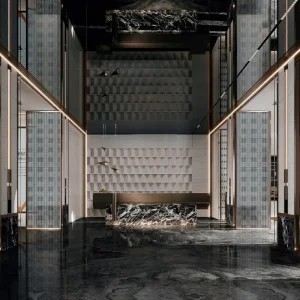
The global reinforced glass market is currently witnessing an unprecedented surge, driven by the rapid urbanization in emerging economies and the stringent safety regulations in developed nations. As a cornerstone of modern architecture and industrial design, reinforced glass—including tempered, laminated, and heat-strengthened variants—has evolved from a luxury building material to a functional necessity.
Today, the industry is not just about strength; it's about intelligence and sustainability. In North America and Europe, the demand for energy-efficient, Low-E reinforced glass is skyrocketing due to carbon neutrality goals. Meanwhile, in Asia-Pacific, the boom in high-rise construction and the automotive sector is pushing wholesale manufacturers to increase capacity while maintaining razor-sharp precision.
Industrial Precision: CNC cutting and automated tempering lines ensure 0.1mm tolerance.
Market Expansion: High growth in Middle East facade projects and Southeast Asian urban hubs.
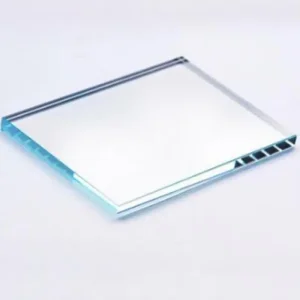
As a leading wholesale reinforced glass manufacturer, we keep a close watch on the shifting tides of technology. The "Smart Glass" revolution is here, where reinforced substrates are integrated with electrochromic layers to control light and heat dynamically.
Increase in Demand for Eco-friendly Low-E Glass
Strength Improvement over standard Annealed Glass
The year Smart-Tinting Glass becomes standard in facades
Carbon Neutral targets for top-tier Glass Manufacturers
Modern factories are now adopting AI-driven quality control systems. Sensors detect microscopic impurities or stress imbalances in the glass pane before it even leaves the furnace. This level of quality assurance is what separates top-tier manufacturers from generic suppliers.
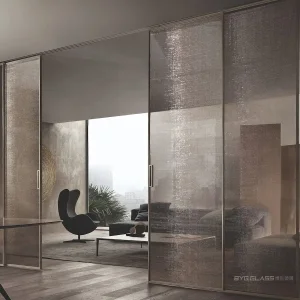
The trend is moving toward reducing the weight of buildings without compromising safety. Chemically reinforced thin glass is now being explored for both architectural glazing and high-end interior partitions, offering the same safety rating with 30% less weight.
Wholesale buyers from the USA, Canada, Australia, and the UK have distinct requirements. While the US market prioritizes ANSI Z97.1 safety certifications and hurricane-impact resistance, the European market focuses on U-values and thermal insulation performance.
Localized Application Scenarios:
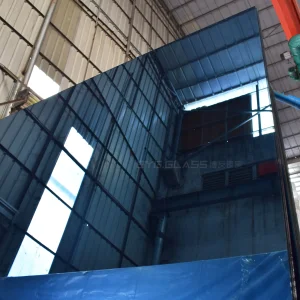
China remains the world's manufacturing powerhouse for glass due to its complete supply chain, from raw silica sourcing to advanced downstream processing. At BYG.GLASS, we leverage these advantages to provide high-end solutions at competitive wholesale prices.
We don't just manufacture; we innovate. Our research into vacuum glazing and smart-tinting glass puts us at the forefront of the industry.
With thousands of square meters produced monthly, we can handle massive skyscraper projects and small-scale custom orders alike.
Located near major shipping ports, we ensure that your reinforced glass arrives safely, on time, and with professional export packaging.
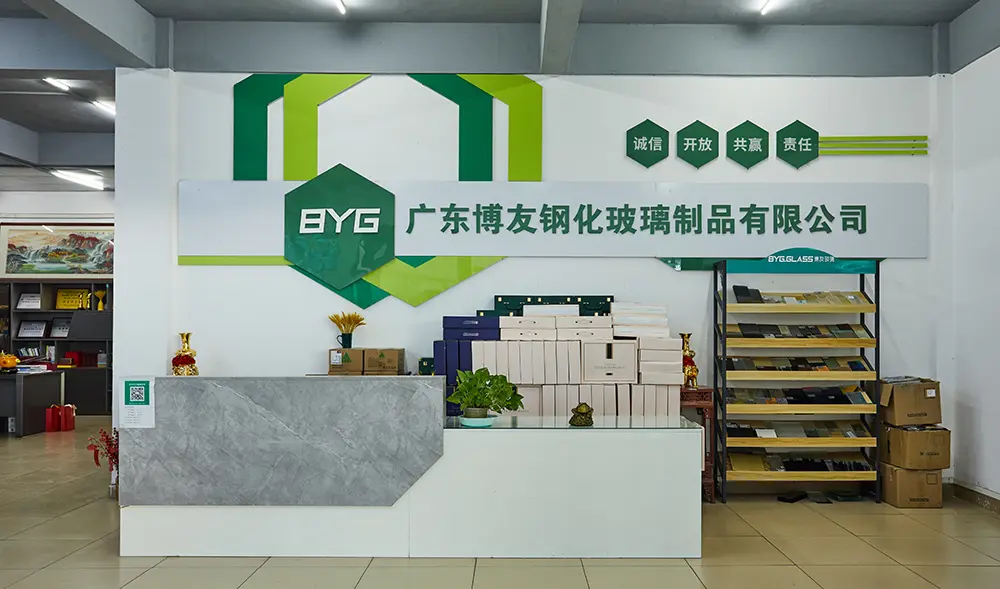
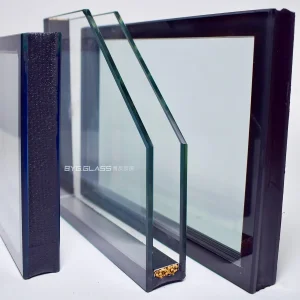
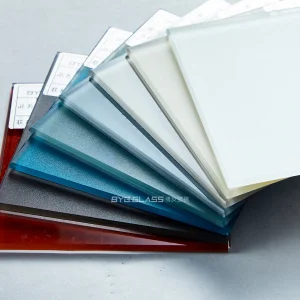
BYG.GLASS, as a large high-end glass source production enterprise, set research and development, production and sales in one, its products cover tempered glass, insulating glass, art glass and home glass products and other fields.
Since its establishment in 2020, it has always been committed to creating all kinds of high-end decorative glass products for domestic and foreign high-end brand doors and Windows, bathroom, high-end home, star hotels, high-end clubs and decoration projects, etc., to meet the diversified market demand with exquisite technology and excellent quality.
BYG.GLASS is always closely aligned with the pulse of the market and accurately captures changes in consumer demand. From the initial focus on the field of doors and Windows, gradually expand business boundaries, and now has formed a full series of product system, can provide customers with one-stop matching services. The company is committed to becoming the industry leader in the industry and trade integration industry of high-end brand doors and Windows, bathroom and custom home.
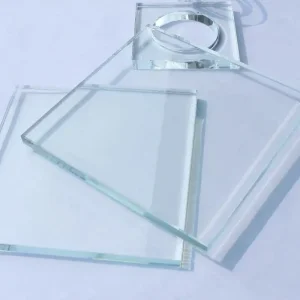
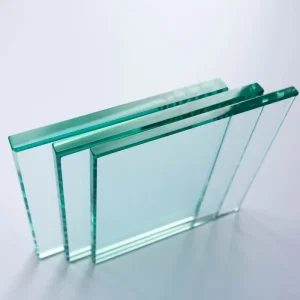
Understanding the difference between reinforced glass types is crucial for procurement managers. Thermal tempering involves heating glass to approximately 620°C and then rapidly cooling it with air jets. This creates high compressive stress on the surfaces and tensile stress in the center, making the glass 4 to 5 times stronger than standard float glass.
However, for certain industrial applications, Heat-Strengthened Glass is preferred. It undergoes a slower cooling process than tempered glass, providing twice the strength of annealed glass while ensuring that if it breaks, the fragments remain larger, often staying in the frame until replaced. This is vital for overhead glazing and certain facade specifications where fallout prevention is a priority.
When "Reinforced" needs to mean "Unbreakable," we turn to Laminated Safety Glass. By sandwiching a PVB (Polyvinyl Butyral) or SGP (SentryGlas Plus) interlayer between two sheets of reinforced glass, we create a barrier that remains intact even when shattered. This technology is essential for:
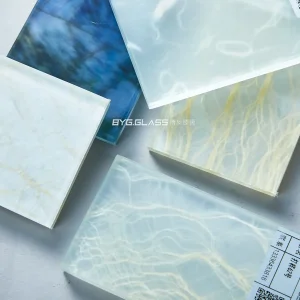
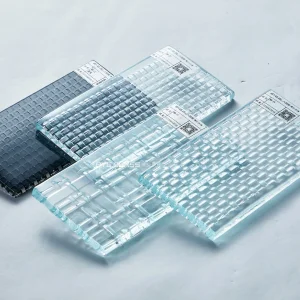
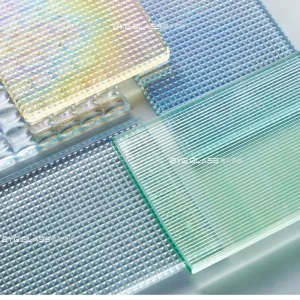
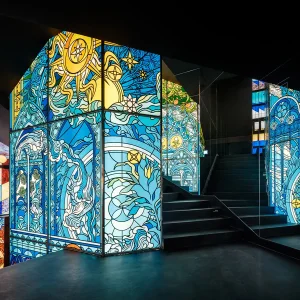
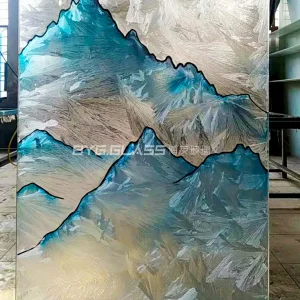
As a specialized factory, we offer Deep Processing that goes beyond basic cutting. This includes CNC edge polishing, water-jet hole drilling for spider-glass systems, and digital ceramic printing for artistic facades. Our digital printing technology allows architects to embed intricate designs directly into the reinforced glass surface, creating a permanent, weather-resistant aesthetic that won't peel or fade over decades.
 BYG.GLASS