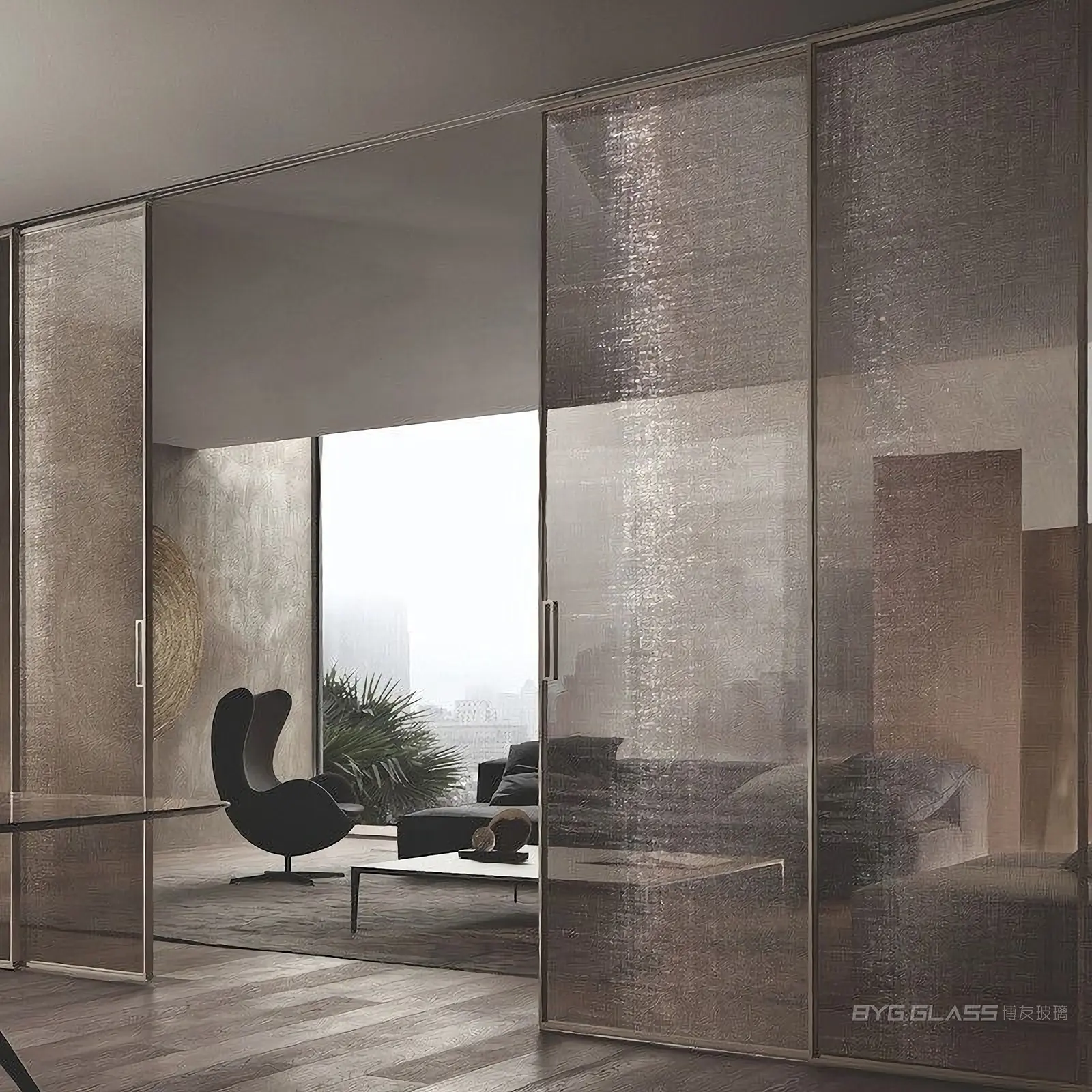
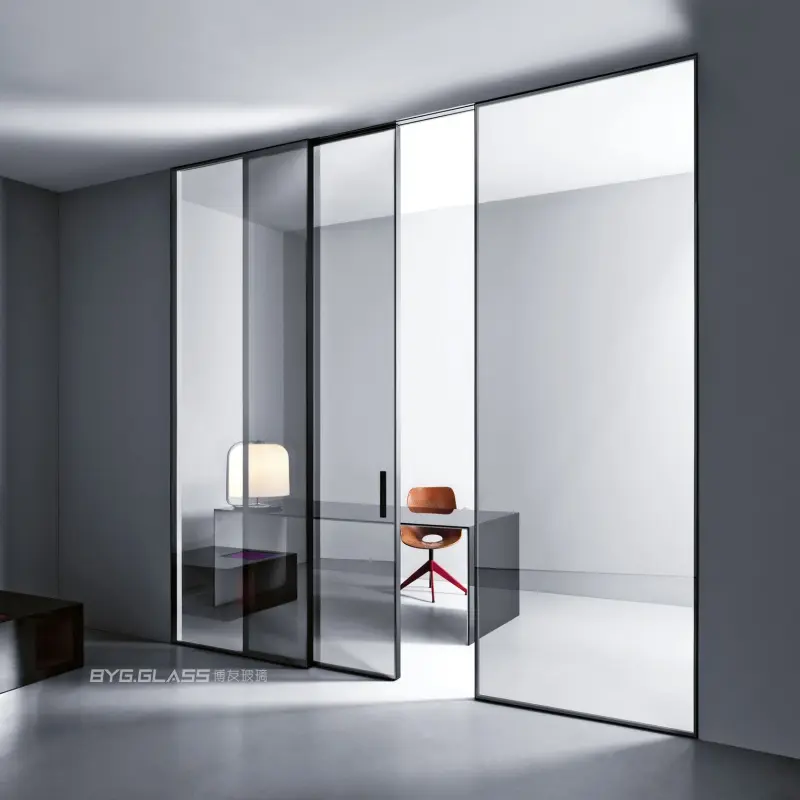
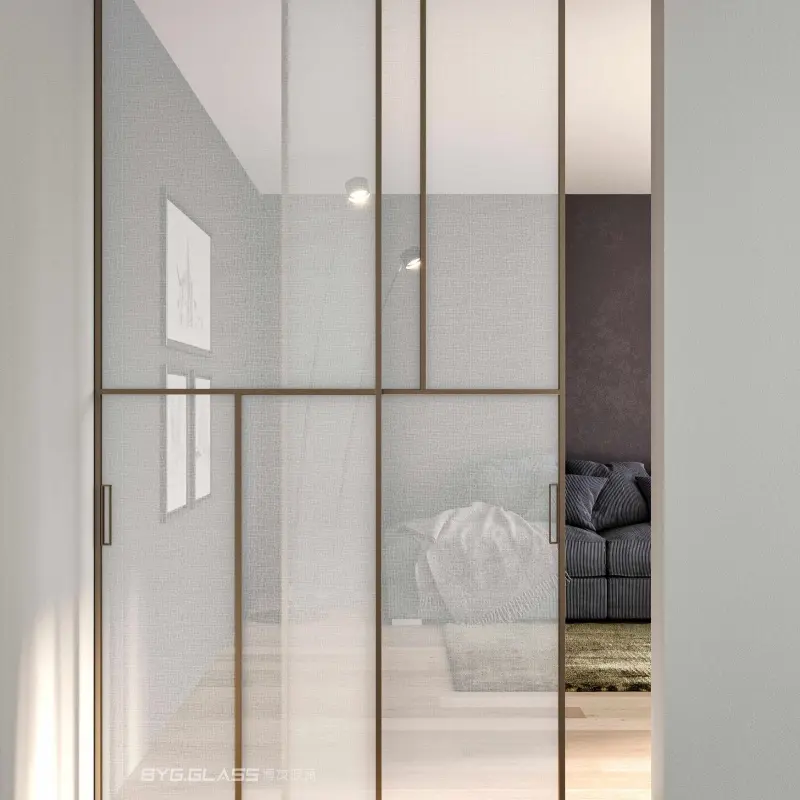
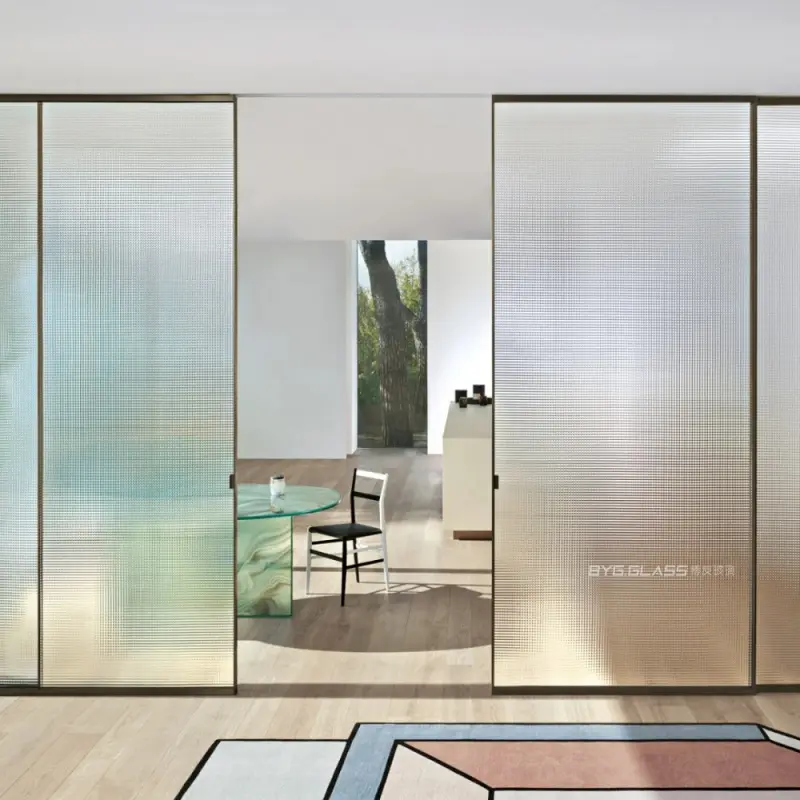
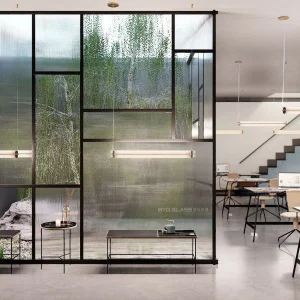
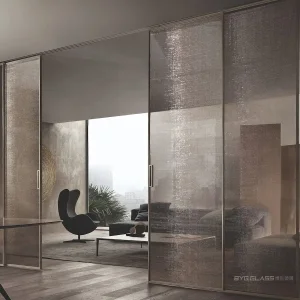
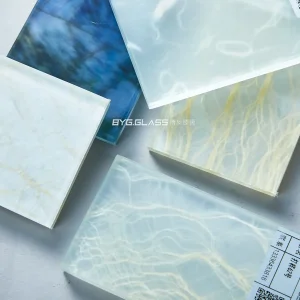
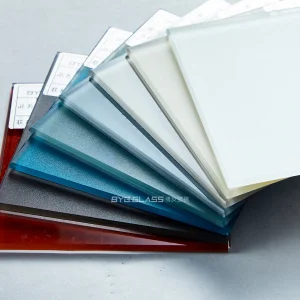
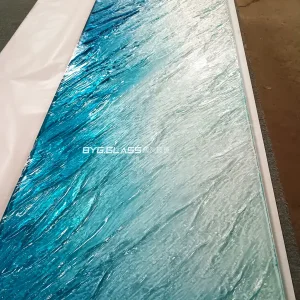
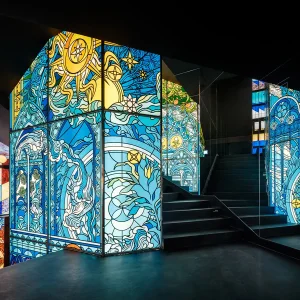
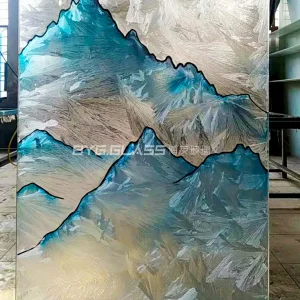
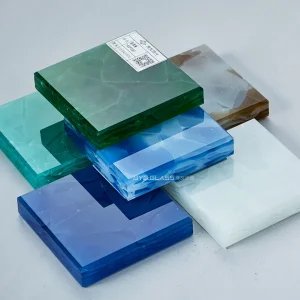
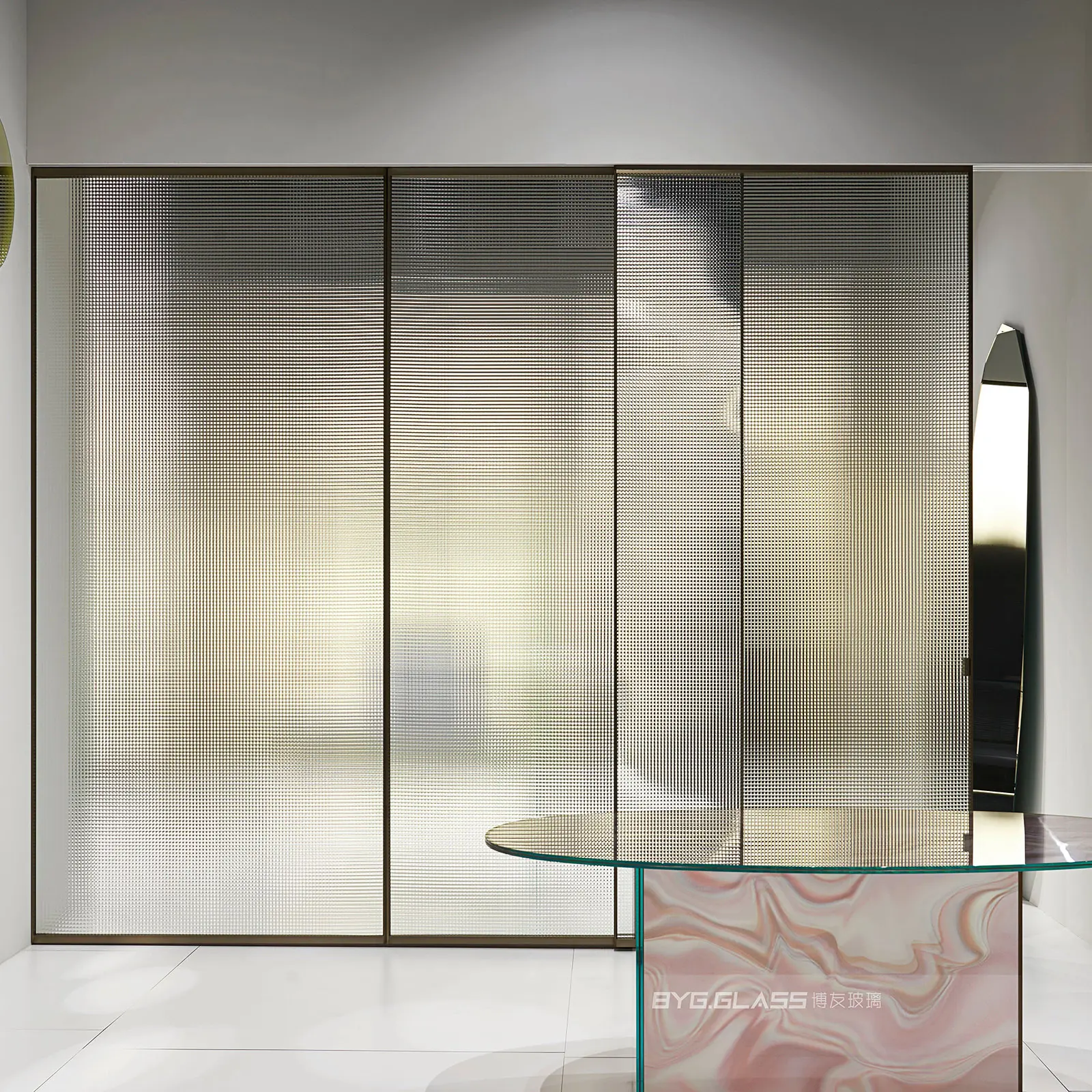
Oil sand glass, not naturally generated, but on the basis of flat glass, by artificial special process treatment, so that the surface of the unique oil sand fine texture of the glass category. It is a combination of artificial ingenuity and exquisite craftsmanship, in the home, commercial and other fields for its unique appearance and performance.
Chemical Etching Method
This is a common process. The carefully selected flat glass is thoroughly cleaned to ensure that the surface is free of impurities. It is then immersed in an etching solution based on hydrofluoric acid. Hydrofluoric acid reacts with silica in glass, dissolves the surface of glass and forms micro-convex structure. By precisely controlling parameters such as etching fluid concentration, soaking time and temperature, the ideal oil sand texture is created. However, the process control requirements are extremely high, and slight changes in parameters can cause differences in the final effect.
Spraying Method
The glass surface is pretreated first to enhance the adhesion with the coating. Then a special spray gun is used to evenly spray the special particle coating on the glass surface. These particles have been carefully screened and their size and shape designed to mimic the look and feel of oil sands. When spraying, it is necessary to strictly control the distance, speed and paint flow between the spray gun and the glass to ensure uniform coating. After drying or curing treatment, the coating is firmly attached and has good wear resistance and weather resistance.
Appearance and Characteristics
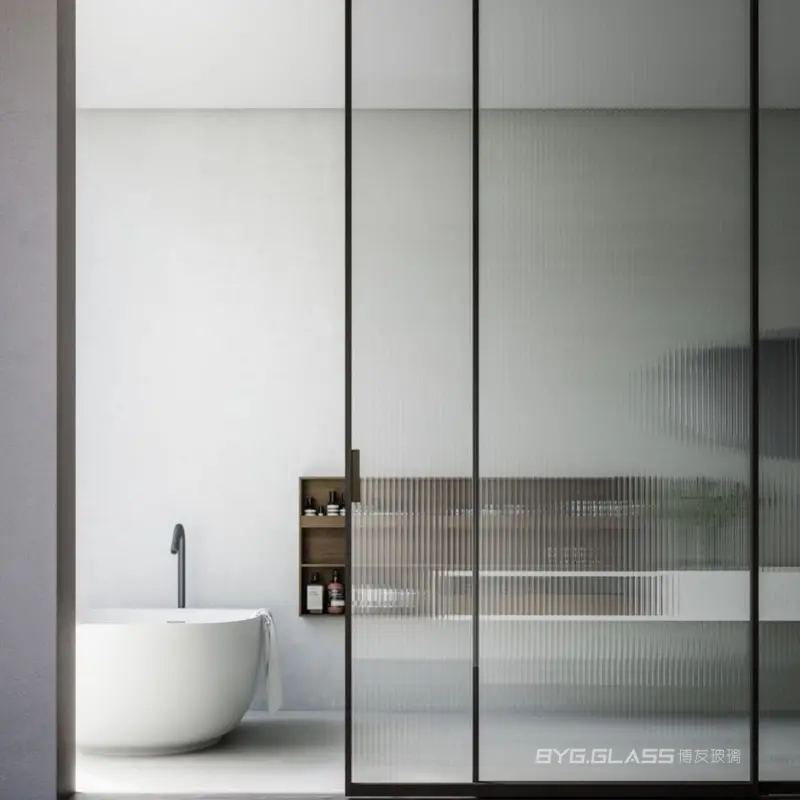
Visual Effect: The oil sand glass presents a unique hazy aesthetic feeling. From the front, it can blur the outline of the object, but it does not completely block the line of sight. It creates a mysterious and soft atmosphere, meeting the needs of space lighting while cleverly protecting privacy.
Texture and Touch: The surface has a fine oil sand texture, and the touch is smooth and slightly grainy, as if touching fine sand. This unique texture enhances the glass touch experience and adds a refined sense of sophistication.
Optical Performance: Compared with the direct light of ordinary glass, the diffuse reflection of the light through oil sand glass is softer and more uniform, effectively avoiding glare. It creates a warm and comfortable lighting environment and reduces eye fatigue.
Physical Properties: After special process treatment, the surface hardness is increased, offering wear resistance and scratch resistance. It maintains appearance integrity in daily use and has good chemical stability.
Home Field
Doors and Windows: Ideal for toilets and bathrooms with high privacy requirements, ensuring ventilation and lighting while blocking the view.
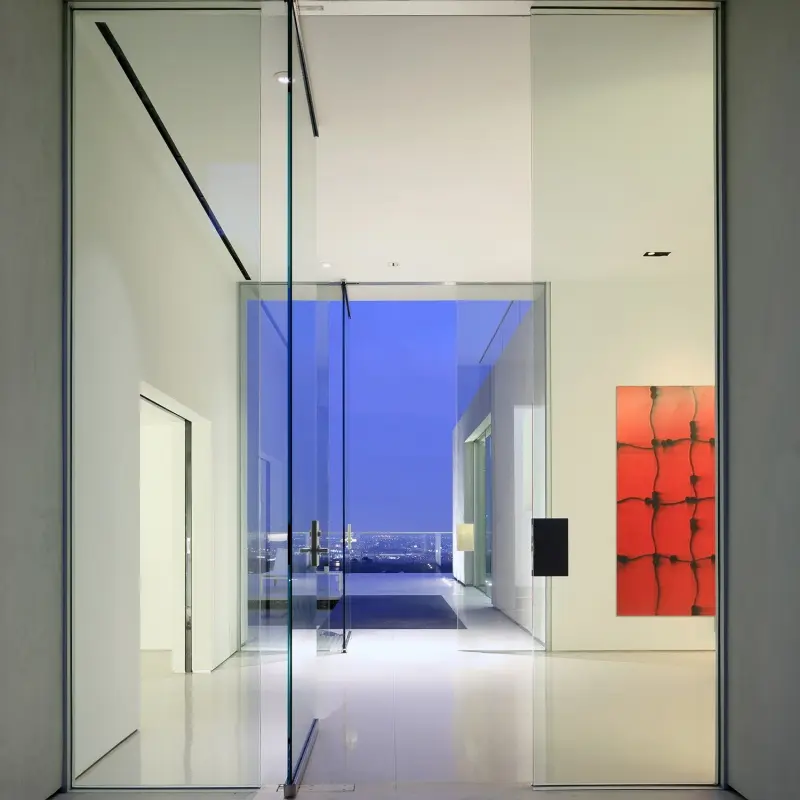
Partition and Screen: Used to divide living rooms, dining rooms, or bedrooms, adding layers and art to the space.
Furniture Decoration: Applied to wardrobe and cabinet doors to display internal items while maintaining a clean, aesthetic look.
Commercial Field
Hotel and Restaurant: Enhances the style and quality of room toilets and private partitions, providing guests with a comfortable and elegant environment.
Office Space: Used in meeting rooms and managers' offices to ensure privacy without creating a sense of oppression.
Commercial Stores: Boutiques and jewelry stores use it for display cases to create a mysterious and high-end atmosphere that attracts customers.
Frequently Asked Questions
Q1: What is the main difference between oil sand glass and frosted glass?
A: Oil sand glass features a finer, more uniform grain texture compared to traditional frosted glass, providing a smoother touch and a more refined "hazy" aesthetic that mimics fine sand.
Q2: Can oil sand glass be used in wet areas like bathrooms?
A: Yes, it is highly suitable for bathrooms. It provides excellent privacy while allowing light to pass through, and its surface is resistant to wear and easy to maintain.
Q3: How do you clean oil sand glass?
A: It can be cleaned using standard glass cleaners and a soft cloth. Its surface is chemically stable and durable, so it does not require specialized maintenance.
Q4: Is the texture on the surface of oil sand glass easy to scratch?
A: No. The special chemical etching or spraying process increases the surface hardness, making it more scratch-resistant and wear-resistant than ordinary flat glass.
Q5: Does oil sand glass block natural light?
A: It diffuses light rather than blocking it. This results in a softer, more uniform distribution of light, which eliminates glare while keeping the space bright.
Q6: Can oil sand glass be customized for specific designs?
A: Yes, through methods like fine spraying, different particle sizes and layers can be created to achieve various three-dimensional effects and levels of opacity.
 BYG.GLASS